What is it?Glaucoma-related optic-nerve damage is often associated with eye pressure, but pressure can be normal in some patients. Diagnosis uses several findings rather than a single test.
Symptoms and warning signs
Arrange an eye examination when you notice symptoms such as:
- Often no symptoms in early open-angle glaucoma
- Gradual loss of side vision
- Difficulty adapting to low light in advanced disease
- Sudden severe eye pain, redness, headache, nausea or halos in acute angle closure—an emergency
Causes and risk factors
- Increasing age
- Family history of glaucoma
- High eye pressure
- Diabetes, high myopia or previous eye injury
- Long-term steroid use
- Anatomically narrow drainage angles
How diagnosis is made
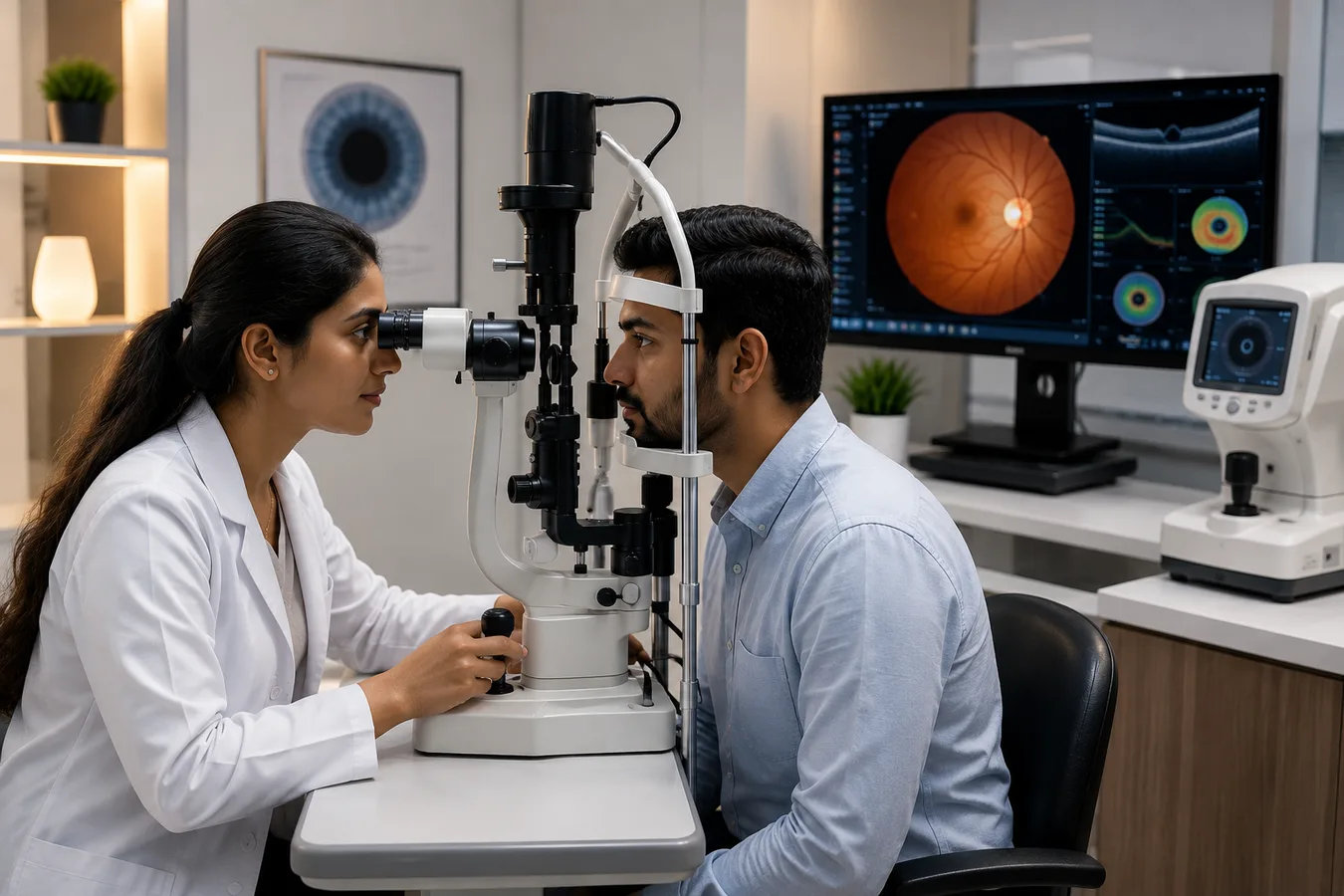
The examination is tailored to the patient. It may include:
- Eye-pressure measurement
- Optic-nerve examination
- Gonioscopy to assess drainage angles
- Visual-field testing when indicated
- OCT or optic-nerve imaging through network support when recommended
Technology and clinical tools
- Applanation tonometry
- Gonioscopy
- Automated perimetry
- OCT-based optic-nerve analysis when available or referred
Specific equipment and procedure availability can vary by centre. SGVEH Champa can help coordinate network-based testing when recommended.
Treatment options
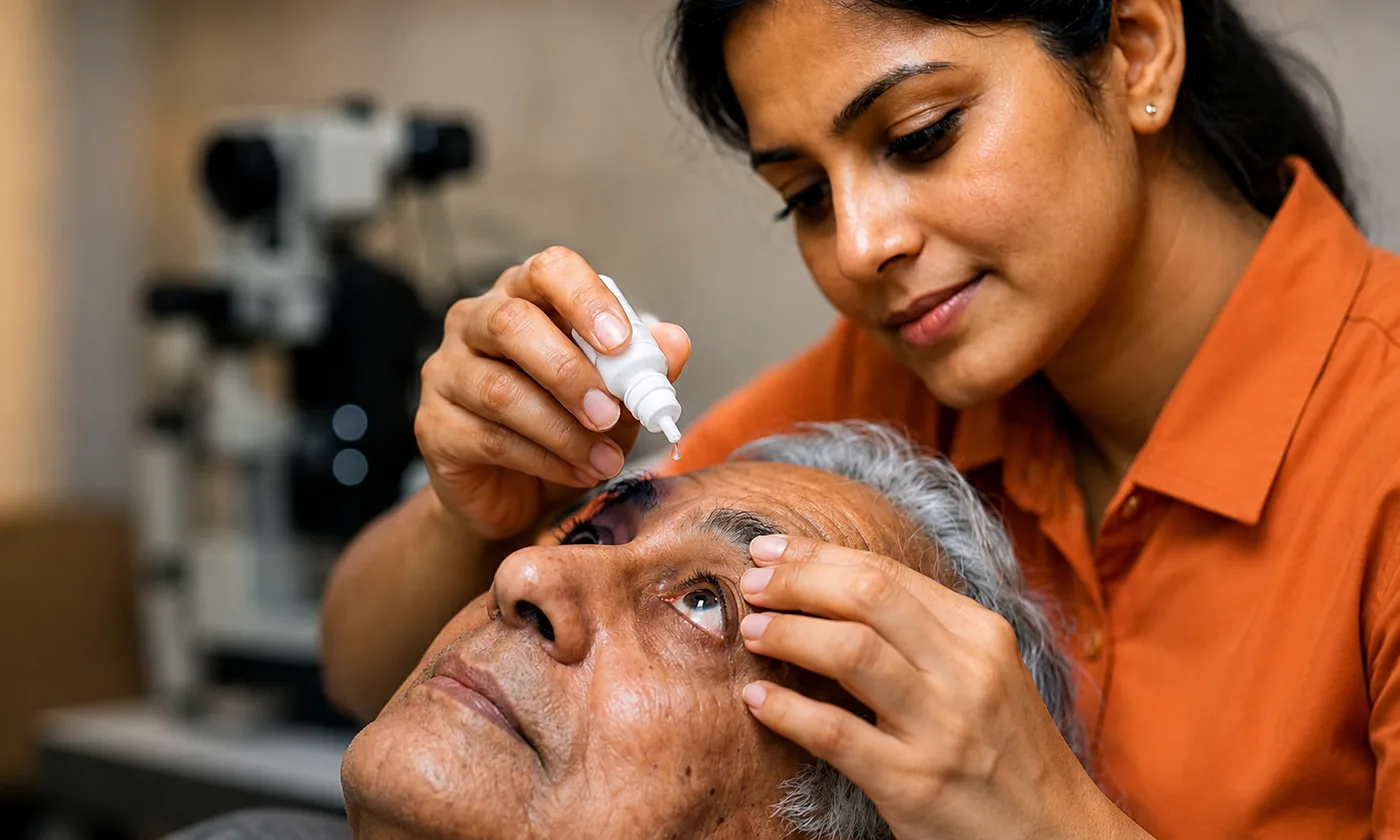
- Pressure-lowering eye drops
- Laser procedures for selected patients
- Surgery when medicines or laser are insufficient
- Regular monitoring to assess progression
Recovery and follow-up
Typical guidance
Glaucoma is usually a long-term condition rather than a one-time treatment. Follow-up schedules depend on pressure, optic-nerve status, field tests and response to treatment.
Doctor’s advice
Use glaucoma drops exactly as prescribed. Do not stop them because the eye feels normal. Family members of a person with glaucoma should ask an eye doctor about screening.
Patient FAQs
Existing optic-nerve damage generally cannot be reversed, but treatment can reduce pressure and help slow or prevent further damage.
No. Some people develop glaucoma at pressures considered within the average range. Optic-nerve and field assessment remain important.
Follow-up may range from weeks to months depending on risk, pressure, nerve findings and treatment response.
Cost varies with medicines, tests, laser or surgery. Call after examination for a plan-based estimate.
Sudden severe eye pain, redness, blurred vision, halos, headache, nausea or vomiting may indicate acute angle closure and needs urgent evaluation.