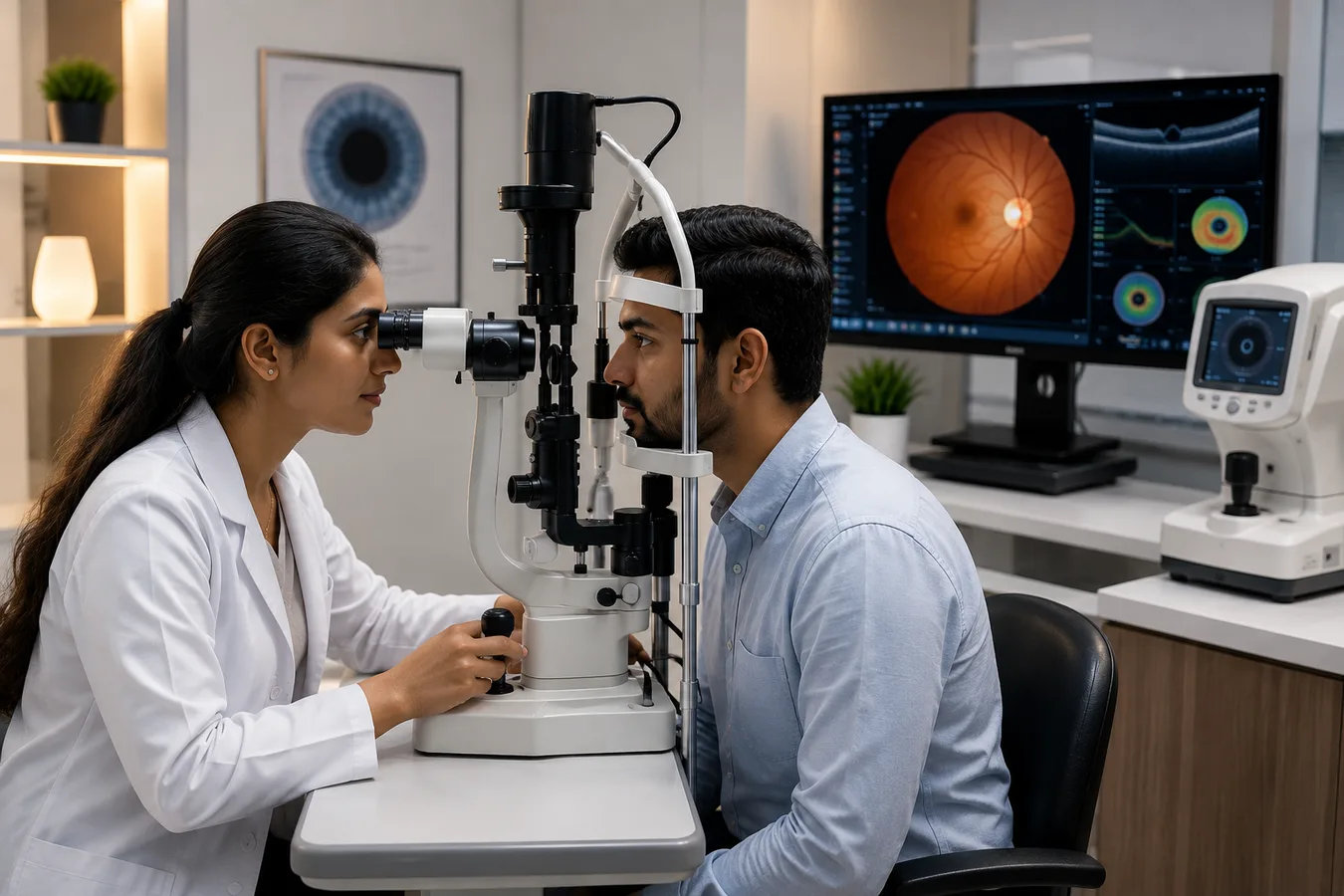
What is it?A comprehensive eye examination is more than a spectacle-power check. It assesses vision, eye pressure, the front of the eye and, when needed, the retina and optic nerve.
Symptoms and warning signs
Arrange an eye examination when you notice symptoms such as:
- Blurred or fluctuating vision
- Frequent headaches or eye strain
- Difficulty reading or seeing at distance
- Glare, halos or night-driving difficulty
- Redness, watering or discomfort
- Diabetes, hypertension or family history of eye disease
Causes and risk factors
- Refractive errors such as myopia, hyperopia or astigmatism
- Age-related near-vision changes
- Cataract, glaucoma or retinal conditions
- Dry eye or ocular-surface problems
- Systemic conditions including diabetes and hypertension
How diagnosis is made
The examination is tailored to the patient. It may include:
- Vision and refraction assessment
- Slit-lamp examination
- Eye-pressure measurement when indicated
- Dilated retinal examination when clinically required
- Additional network-based tests such as OCT or visual fields when recommended
Technology and clinical tools
- Clinical refraction and vision testing
- Slit-lamp biomicroscopy
- Tonometry for eye-pressure assessment
- Retinal examination lenses and referral-linked diagnostics
Specific equipment and procedure availability can vary by centre. SGVEH Champa can help coordinate network-based testing when recommended.
Treatment options
- Updated spectacles or vision correction
- Medical treatment for diagnosed eye conditions
- Lifestyle and eye-care advice
- Referral for cataract, retina, glaucoma or other specialist care
Recovery and follow-up
Typical guidance
There is usually no recovery period after a routine examination. Dilating drops may blur near vision and increase light sensitivity for a few hours, so driving should be avoided until vision feels comfortable.
Doctor’s advice
Do not wait for severe symptoms. Adults with diabetes, a family history of glaucoma, high spectacle power or age-related vision changes may need regular eye checks based on their doctor’s advice.
Patient FAQs
Many visits take about 30–60 minutes, but dilation, additional tests and waiting time can make the visit longer.
Dilation is used when the doctor needs a clearer view of the retina or optic nerve. It is not required in every visit.
Frequency depends on age, symptoms, spectacle power, diabetes, glaucoma risk and previous eye findings. Follow the schedule advised by your eye doctor.
Cost depends on the consultation and tests required. Call SGVEH Champa for current charges.